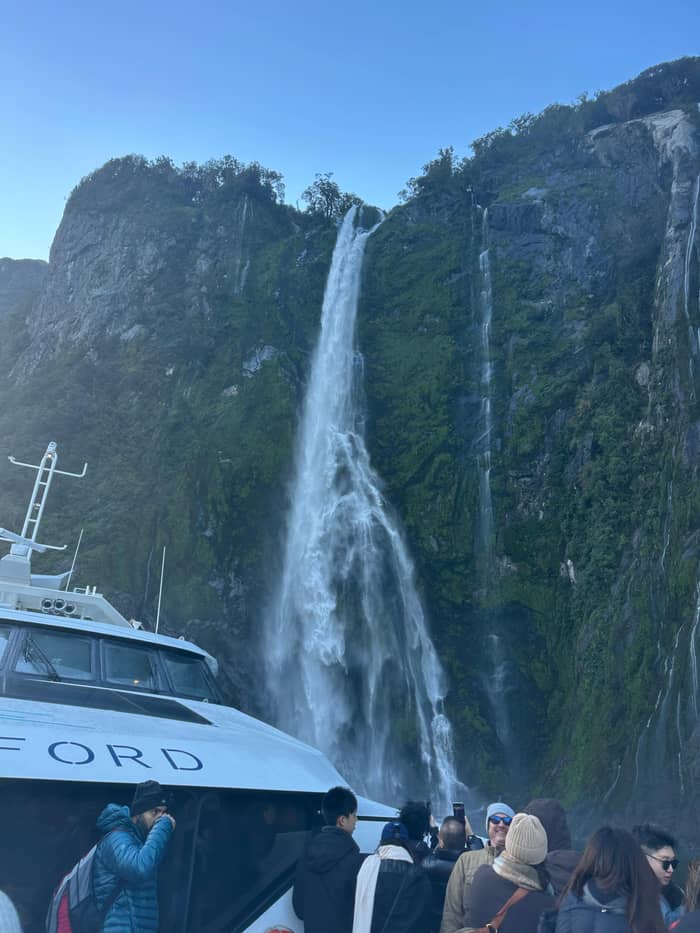
Dolphins
Doubtful Sound dolphins
The remote fiord
Compare this encounterGuides
Language
Currency
See open slotsstarting at $156 · free cancellationYour stop on the map
Milford Sound coach and cruise day from Queenstown
★ 4.7 · 4,064 user reviews
Discover 11 stops
Tap a route first, then a pin or stop, for its note and Google Maps.
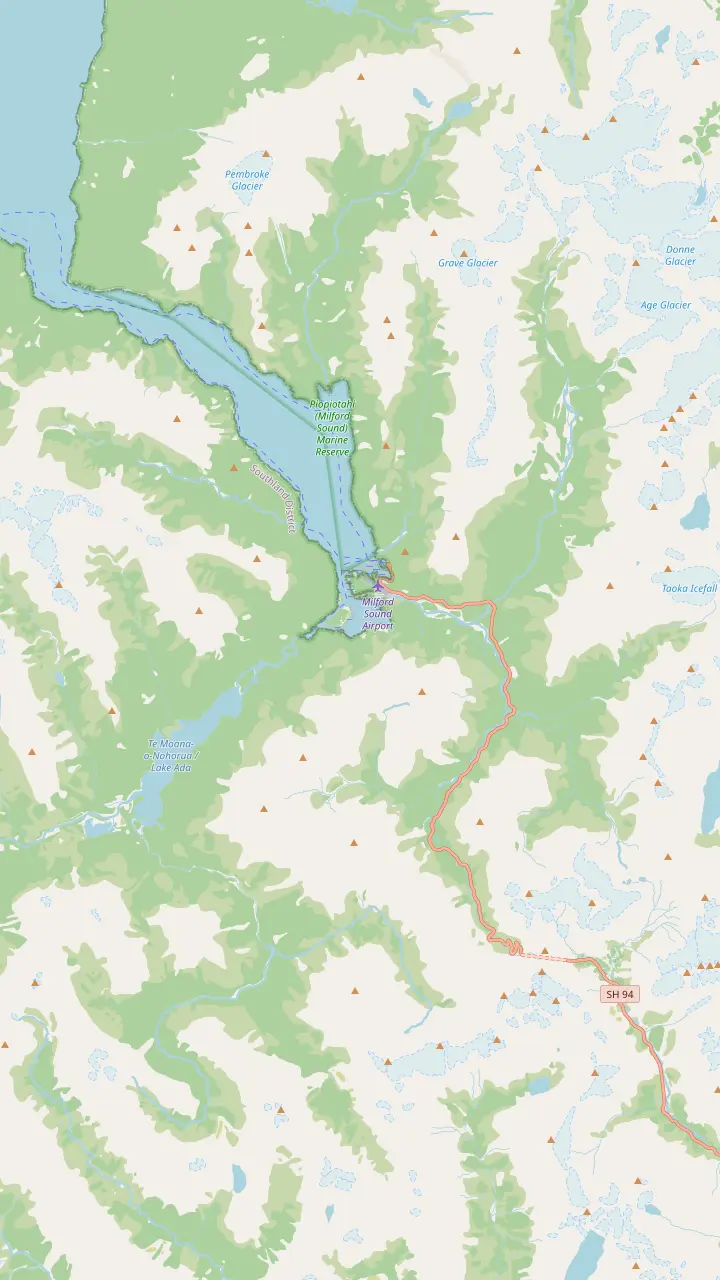
Kea are often seen around the Homer Tunnel, and its traffic signals can cause delays of up to 20 minutes.
Google MapsIf you are taking a cruise, DOC says to allow one hour for parking and walking to the visitor terminal.
Google MapsStirling Falls is Milford Sound's second-largest permanent waterfall.
Google MapsMitre Peak rises 1,692 m directly from the water.
Google Maps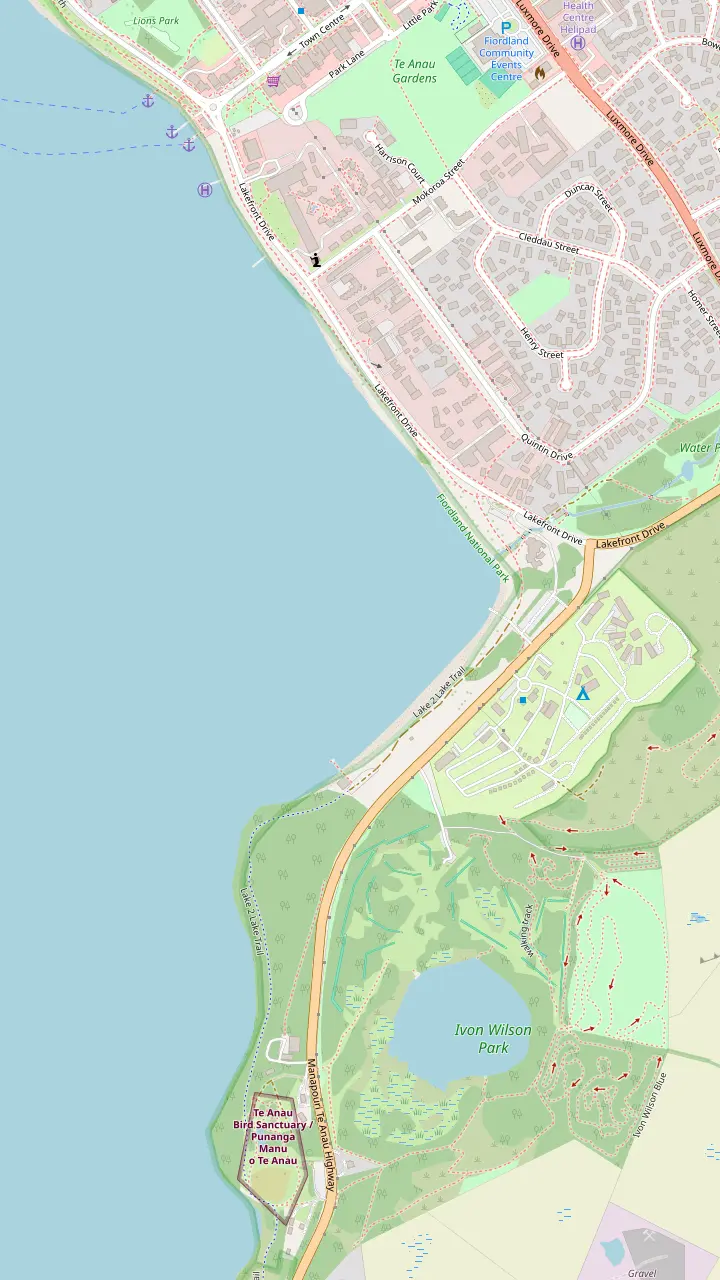
The Fiordland National Park Visitor Centre on Lakefront Drive holds the park information for Te Anau.
Google MapsThe Te Anau Bird Sanctuary shows the rare, flightless takahe and other birds.
Google MapsThe glowworm caves tour starts with a cruise across Lake Te Anau to the remote western shores.
Google Maps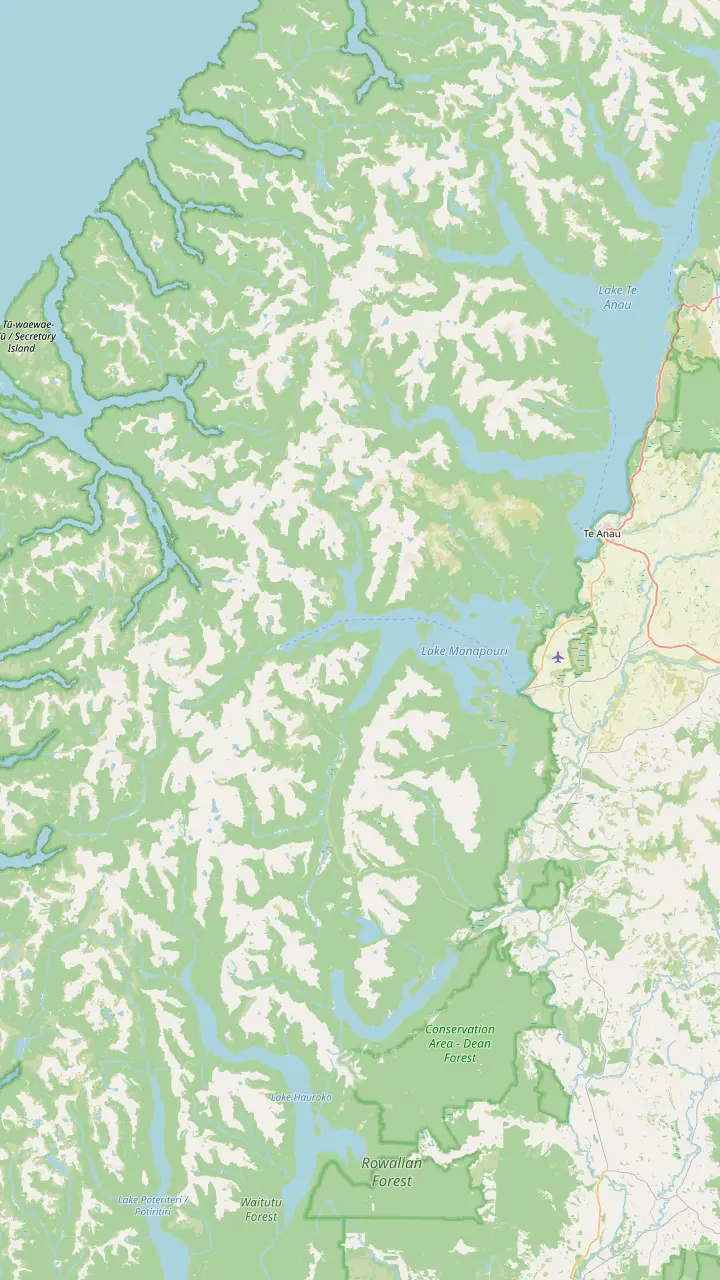
The easiest way to Doubtful Sound starts by boat from Pearl Harbour wharf in Manapouri.
Google MapsAt West Arm guests board a coach for the 45-minute drive over Wilmot Pass.
Google MapsThe Wilmot Pass Road is 21 km long and reaches 671 metres at the summit.
Google MapsDeep Cove has no township, shops or cafe; the only permanent structure is an outdoor education centre.
Google MapsMap © OpenStreetMap contributors
People search for the underwater observatory, the dolphins and the penguins before a cruise. This guide says what the official sources tell us about each, when the animals show up and how to give them room.
Editorial team, fiordlandcruises.com · Updated November 6, 2026 · Reading: 6 min
Main facts
Some searches for a Milford Sound cruise name the underwater observatory, so here is the honest position. The current Milford Sound cruise pages of Southern Discoveries and RealNZ, which we read for this guide, describe waterfalls, wildlife and a stop in Harrison Cove, and neither lists an underwater observatory as part of the cruise. We found no official page that offers it today, so we will not tell you it is open.
What Southern Discoveries does say is that every cruise goes the full length of the fiord, weather permitting, and visits sights including Stirling Falls and Harrison Cove.6 The overnight boat on RealNZ's Milford trip anchors in Harrison Cove, where guests can paddle a kayak, take a tender boat excursion or swim.7 If the observatory matters to your plan, ask the operator in writing before you book.
The fiord does have an underwater story to tell without a building. DOC explains that very high rainfall leaves a permanent freshwater layer on the sea surface, stained a tea colour, and that below it a 40 metre band of unusual marine life grows on and around the sheer rock walls.4 That layer, and the reserve around it, is the underwater story of the fiord. Ask any operator what the guide will point out on the day, because that is a better use of your questions than hoping for one particular stop.
Who lives here
| Animal | Where to look | What to know |
|---|---|---|
| Bottlenose dolphin | Doubtful Sound/Patea | Around 66 residents, as at 20251 |
| Fur seal | Seal Rock, Milford Sound | Seen year-round3 |
| Fiordland crested penguin | Milford Sound, Jackson Bay | Breeds July to November2 |
| Kea | Homer Tunnel | Often seen there; do not feed17,18 |
| Rock wren | East Homer Nature Walk | Rare, among boulders19 |
| Takahe | Te Anau Bird Sanctuary | Rare and flightless20 |
Sightings are never guaranteed; the animals are wild and the sources above say so.5
The numbers explain why the underwater world is unusual. Milford Sound/Piopiotahi stretches 16 kilometres to the open sea and is 265 metres deep in places by the Department of Conservation's figure, while Southern Discoveries gives up to 400 metres.11,12 DOC says the area is one of the wettest in the country, with up to 7 m of rain per year, and that the mountains continue under the water to depths of up to 265 m.13
Piopiotahi (Milford Sound) Marine Reserve is one of 10 marine reserves in Fiordland, and Doubtful Sound is home to three of them.14,15 Any vessel entering the Fiordland Marine Area, even a kayak, must hold a Clean Vessel Pass.16 Those rules keep boats and pests out of a place where the freshwater layer is thin and easily disturbed.
For you as a visitor, the practical effect is the water itself. On a cruise you see the surface, the cliffs and the waterfalls, and the tea colour is visible when you lean over the rail. The observatory question is a footnote to the real show, which is the fiord's walls, its falls and the animals that use them, and the rest of this guide takes those animals in turn.
A year of Fiordland wildlife
December to February
RealNZ describes summer as the time dolphins and fur seals are most active.8
March to May
Autumn brings fewer crowds and waterfalls at their most theatrical after sustained rain.9
June to August
DOC names July to November as the tawaki breeding season.2
September
Fur seal pups begin to appear on rocky outcroppings from September.10
October
Baby dolphins make their first appearances from October.10
November
July to November is the tawaki breeding window.2
The dolphins in question are bottlenose dolphins. DOC says the Fiordland Marine Area has around 66 resident to Doubtful Sound/Patea and around 120 to Tamatea/Dusky Sound, as at 2025, and that New Zealand sits at the southernmost point of the species' range.1,25 The species has a conservation status of nationally vulnerable.26
DOC says Doubtful Sound is known as the Sound of Silence, with one of the southernmost populations of bottlenose dolphins.23 Milford Sound visits can include dolphins too, but RealNZ's seasonal notes say fur seals and dolphins are most active in summer, and baby dolphins appear from October.8,10 Neither fiord promises them on a given day.
The rules for watching are specific. DOC asks boats to approach from the side and slightly to the rear, at no wake speed within 300 m, and not to approach a group if three or more boats are already within 300 m.27,28 It says not to swim with dolphins when calves are present, and warns that boats can interfere with normal behaviour.29,30
What you hope to see
Say which animal matters most and see where to look.
If I want dolphins
Doubtful Sound
Doubtful Sound has one of the southernmost populations of bottlenose dolphins.23
If I want penguins
Winter or spring
DOC gives July to November as the best time to see tawaki.2
If I want seals in any month
Milford Sound
Fur seals at Seal Rock are now seen year-round.3
If I want kea
The Milford Road
Kea are often seen around the Homer Tunnel.17
If I want to see underwater
Ask the operator first
The freshwater layer and the band of marine life below it are described by DOC.4
Pick your encounter
Dolphins
The remote fiord
Compare this encounter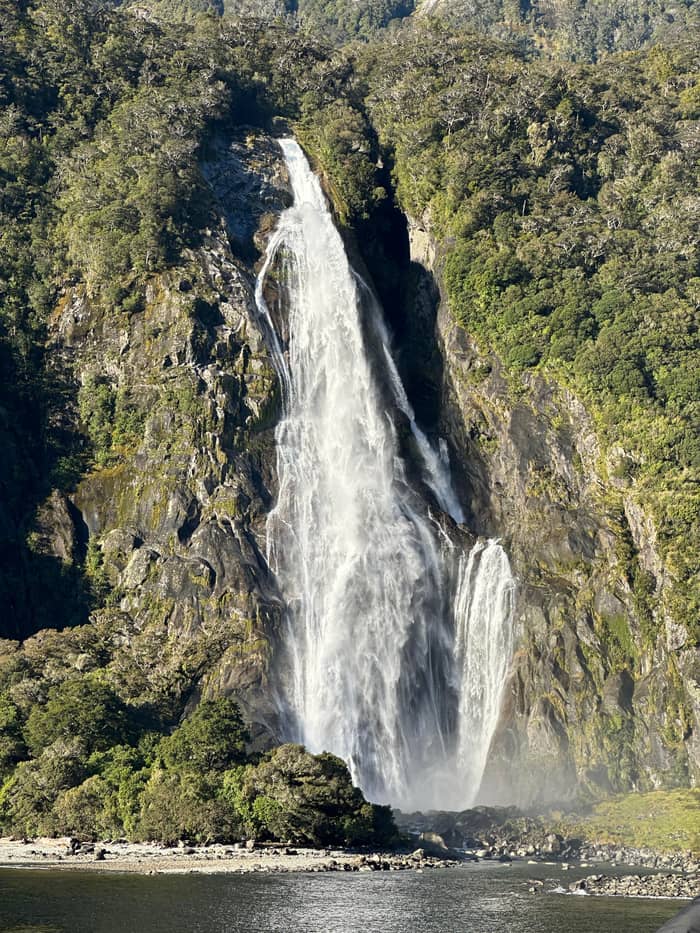
Seals
Seal Rock and the cliffs
Compare this encounter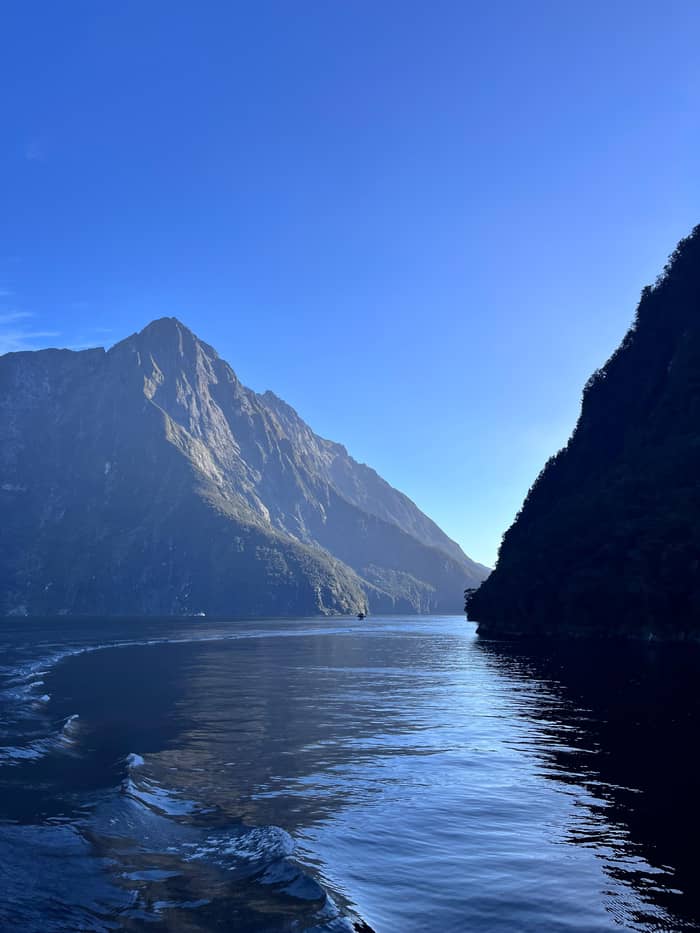
Parrots
The Homer Tunnel
Compare this encounterFur seals are the easy sighting. RealNZ says Seal Rock offers a resting spot for New Zealand fur seals among the cliffs, that they were hunted nearly to extinction in the 1800s, and that they are now seen year-round.3 Seal pups begin to appear on rocky outcroppings from September, according to RealNZ's seasonal guide.10
Penguins take more luck. DOC calls the Fiordland crested penguin, or tawaki, one of the rarest of New Zealand's mainland penguins, with a population of between 2,500 and 3,000 breeding pairs that has been in decline since the 1950s.24,42 They can be seen in Milford Sound and at Jackson Bay, and they are very timid, so do not approach birds, nests or beach areas where penguin tracks are common.43,41
On the road in, the star is a parrot. Kea, the mountain parrots, are often seen around the Homer Tunnel, and DOC asks you not to feed endangered kea or other wildlife.17,18 On the East Homer Nature Walk you may hear or glimpse a rare rock wren, living among large boulders.19 In Te Anau, the bird sanctuary shows the rare, flightless takahe.20
Cost of a wildlife day
Choose how many travel and see each from price.
Choose from 4 options
Choose how many travel and see each from price.
≈
View≈
View≈
View≈
ViewConverted at the ECB reference rate, from-prices as listed by GetYourGuide. The precise amount is shown when you book.
Season matters more for some animals than others. RealNZ describes summer, December to February, as the time of the most active dolphins and fur seals, and spring, September to November, as the time of fur seal pups and penguin chicks on rocky shores.8,44 DOC gives July to November as the best time to see tawaki, during the breeding season.2
DOC adds that tawaki can sometimes be seen during the moulting season from mid-January to early March.2 RealNZ's winter notes add snow on Mitre Peak and a penguin breeding season underway.45 The practical reading is that winter and spring suit penguins, summer suits dolphins and seals, and you can see seals in any month.
Do not plan a whole trip around one species. Southern Discoveries says every cruise offers a chance to see wildlife but cannot guarantee sightings.5 RealNZ makes the same point: guides will look, but the animals' spontaneity means sightings are not guaranteed, and some of the animals are in decline.46 Treat a sighting as a bonus on top of the waterfalls.
Video
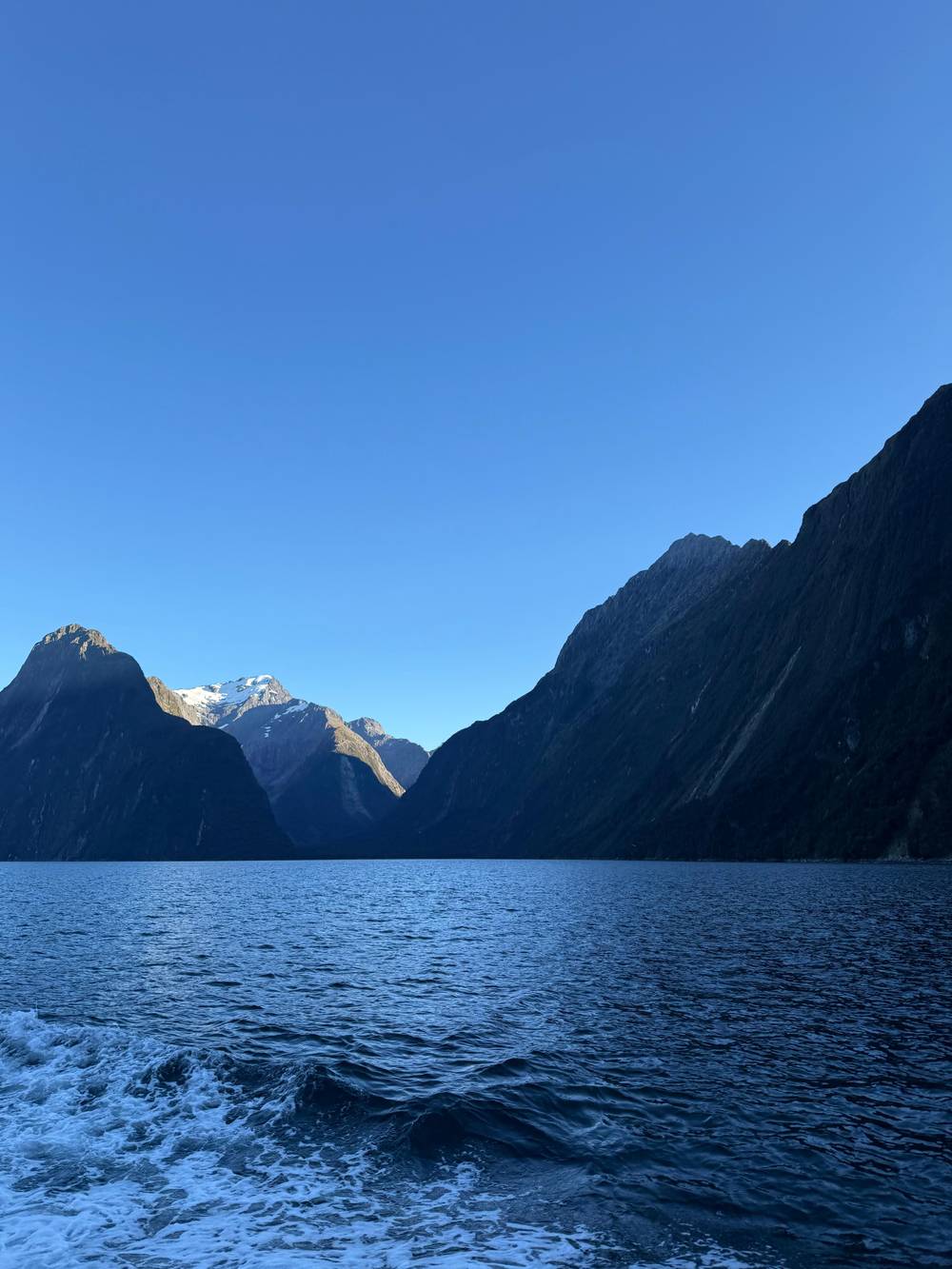
Somendra Solanki on YouTube · The video stays unloaded until you press play.
The Fiordland crested penguin or tawaki, is one of the rarest of New Zealand’s mainland penguins.
Watch with care
For dolphins, the Doubtful Sound day trip from Manapouri lasts 7 hours and starts from $188, with a 2.5 hour cruise in the fiord.21 For a Milford Sound cruise with a nature focus, one listing lasts 2 hours and starts from $99, and another runs 105 minutes from $82.
Kayakers see the fiord differently. The kayak operator says its sea kayaks go places the cruise boats cannot, with less noise and fewer crowds, and that wildlife sightings from a kayak cannot be guaranteed.47,48 DOC does not allow pets in Fiordland National Park, so leave the dog at home, since dogs are a serious risk to penguin colonies.40,49
Carry binoculars, keep your voice low and stay behind the rail. Sightings are brief, and the cruise passes Seal Rock and the waterfalls quickly. If you want longer with the animals, the overnight options give time at anchor, and a guide on board tells you what you are looking at. RealNZ says morning departures are generally quieter and the water is often calmer, which suits wildlife watching as much as photography.50 Use the map above to place Stirling Falls, the Homer Tunnel and the Doubtful Sound route.
FAQ
Current Southern Discoveries and RealNZ cruise pages describe Harrison Cove and wildlife instead, so ask the operator before booking.6
DOC names the breeding season from July to November as the best time to see tawaki.2
RealNZ says New Zealand fur seals rest there and are now seen year-round.3
DOC asks visitors not to feed endangered kea or other wildlife.18
Boats should approach from the side and slightly to the rear, at no wake speed within 300 m.27
DOC says pets are not allowed in Fiordland National Park.40
Sources
Continue reading
Choosing between Milford Sound and Doubtful Sound? A real person answers here.